How AI-Powered WMS Is Transforming Warehouse Management in India
By Moeen Khan
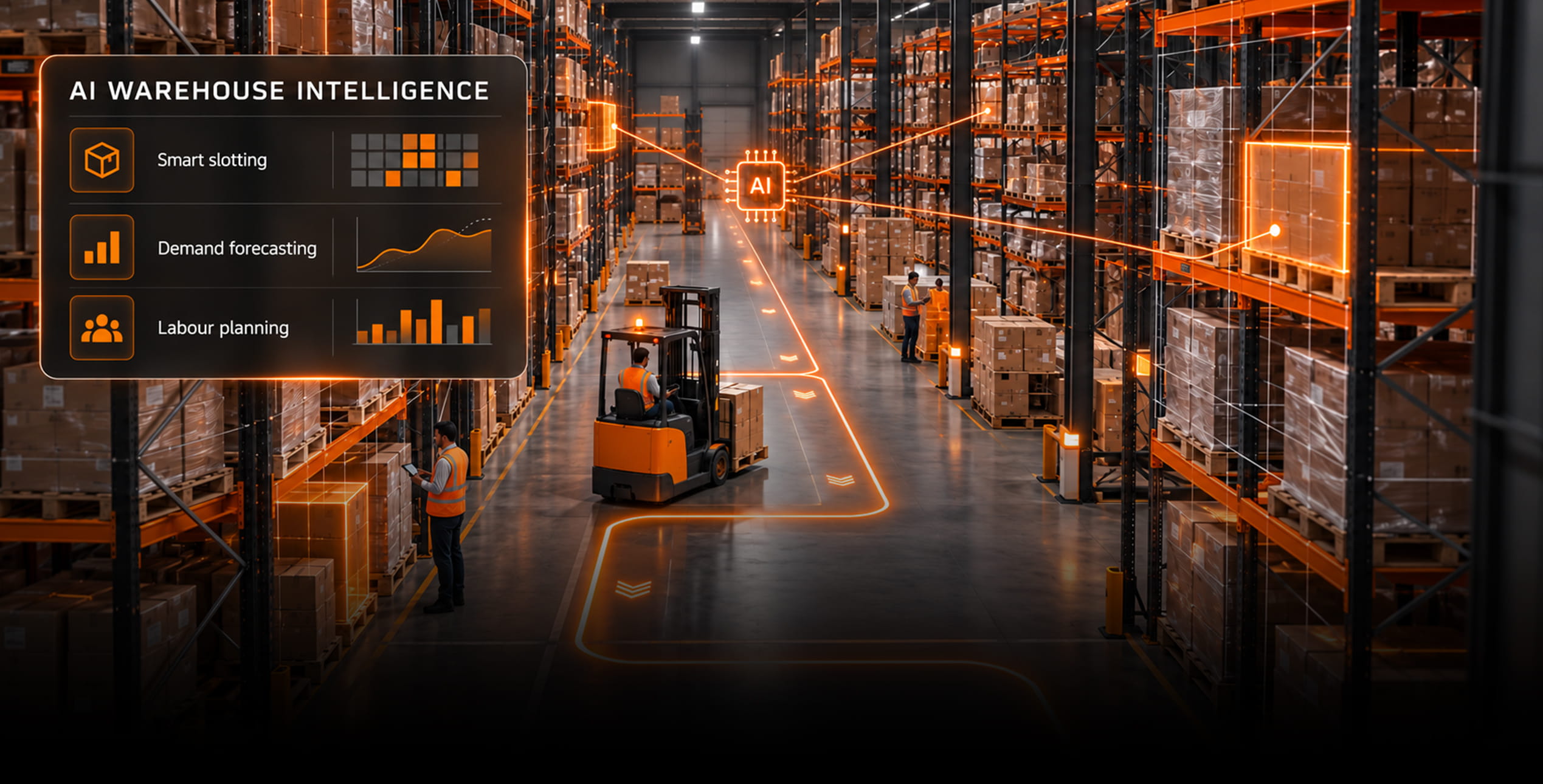
A misplaced pallet, an outdated two-hour-old pick list and orders that are late because you didn’t know you were out of stock. This is an everyday issue for warehouses in Indian and can’t be overcome with spreadsheets. An AI powered WMS can. Through learning from your inventory, orders and processes, it can guide your team on what to do next. Here are the ways a modern WMS system is transforming warehouse management in India and what to consider when choosing one.
What Is an AI-Powered WMS, and How Is It Different From a Traditional WMS System?
A Warehouse Management System (WMS) manages receipt, storage, picking, packing and despatch. A traditional WMS will have some set rules, so you know where your items should be stored and in what order to pick. An AI powered WMS uses machine learning to learn from your orders, inventory movements and labour data. It will make recommendations on your slotting to improve it, pick paths to shorten them and alerts to identify issues quicker.
This is like having a paper map vs a navigation app. With a paper map you will see the roads. But with an app it will change your route if there's a hold up.
Why Indian Warehouses Need Smarter WMS Software Now
India’s warehousing sector is expanding fast. According to JLL, industrial and warehousing stock across the country’s eight major cities stood at about 514 million sq ft in Q1 2026 and is expected to reach roughly 850 million sq ft by 2030, driven by e-commerce, manufacturing incentives and supply chain diversification. Mordor Intelligence similarly sizes the Indian warehouse market at about USD 27.3 billion in 2026, growing at around 8.5% a year to roughly USD 41 billion by 2031.
Efficiency matters as much as space. A DPIIT-NCAER study puts India’s logistics cost at 7.97% of GDP for FY24, well below the older 13–14% estimates, and policies such as the National Logistics Policy and the Unified Logistics Interface Platform (ULIP) are pushing the sector to digitise. Despite the many warehouses that still use manual systems, spreadsheets and human resources, there is now a greater expectation for faster delivery due to the rise in e-commerce. Customers also need accurate information. This is made complicated by seasonal spikes, large SKU numbers and permanent and seasonal staff. A WMS can help manage these issues by providing managers with one source of accurate information.
Key Ways an AI-Powered WMS Transforms Warehouse Operations
Smarter Put-Away and Slotting
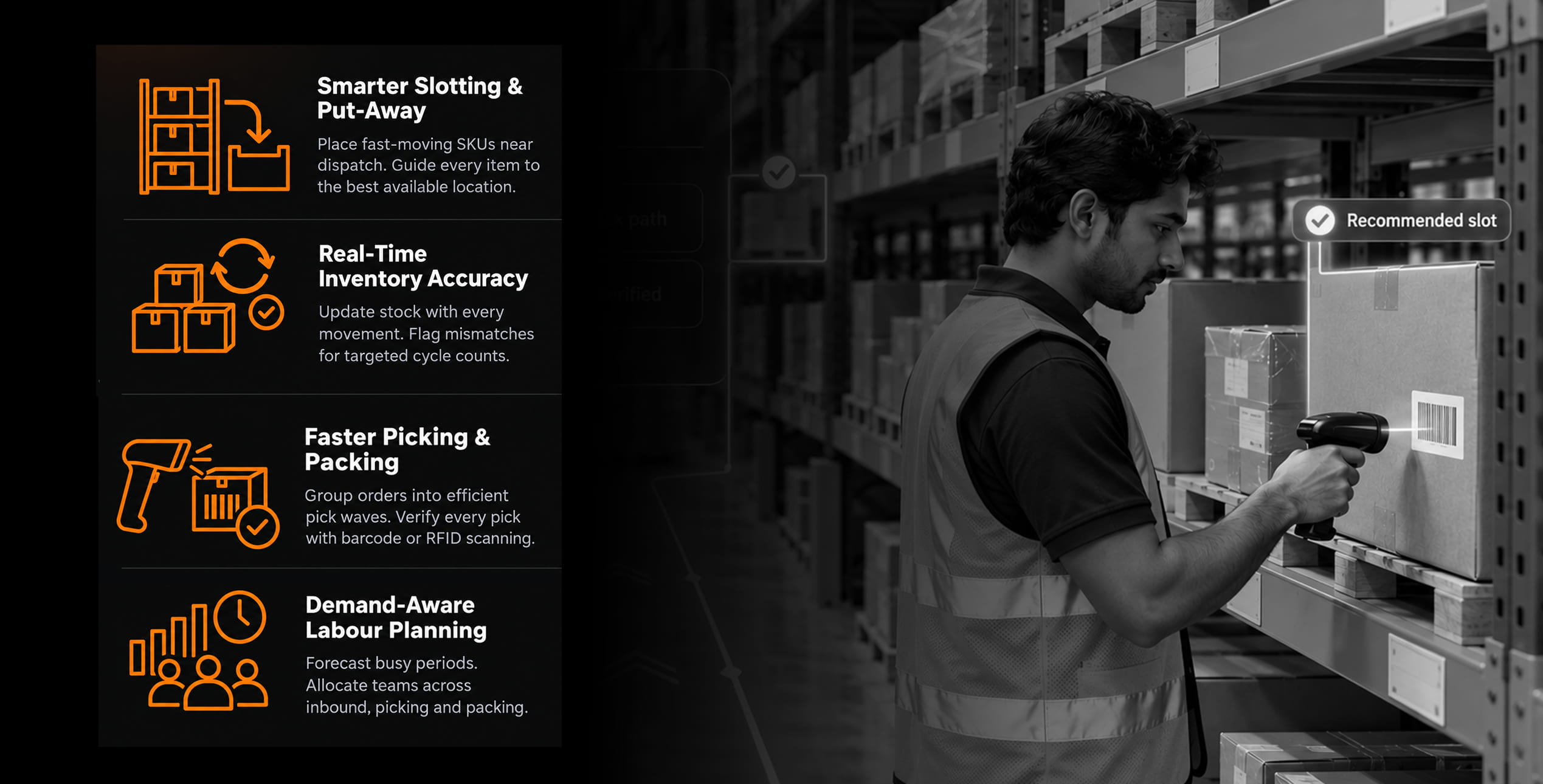
SKU’s with high turnover will be slotted near the dock, whilst slow movers will be slotted higher or lower. Using AI to learn from order history means that the optimal location for every SKU will be suggested. The put-away process will then automatically allocate the best available SKU to reduce the amount of walking for pickers and reduce congestion.
Faster, More Accurate Picking & Packing
Orders are grouped into waves or batches using an AI powered WMS to optimize picking routes. Likely mistakes are flagged ahead of packing. All picks are verified with a barcode/RFID scanner to reduce sending out incorrect items.
Accurate Real-Time Inventory
Every time an item moves, gets shipped out or received, the inventory is instantly updated. This means there is no need to shut down and carry out a full stock take. The AI will look for patterns in the data, for example a site that consistently shows discrepancies and then schedule a cycle count.
Labour Allocation & Planning based on Demand
Shifts can be planned using data rather than gut feeling. The system will predict busy periods and will advise how much staff should be allocated to receiving, picking and packing based on order trends.
Connecting Your WMS and TMS to GPS Tracking, Smart Locks and Digital Locks
Once products are on the road, they are at their most vulnerable. To ensure full control of your stock you would want your warehouse management system to integrate with your transport management system and security solutions. The WMS will identify what needs shipping and the TMS will decide how, when and who will be using it.
If your WMS integrates with your TMS then once an order has been picked it will automatically go through to loading, carrier and route selection. If you add GPS tracking to your solution your dispatch team will know what vehicle has gone out with what order, meaning you can provide accurate delivery times to your customers. The TMS will manage the freight billing and proof of delivery. If you add smart and digital locks to your solution, then every time a lock is opened/closed it will record when and where. If a sealed load was opened during an unexpected stop you will get alerted. This fills the gap between shipping from the warehouse to receiving it from your customers, which often causes arguments.
What to Look for When Choosing the Best WMS in India
There is no single winner for every business, so judge by fit. Shortlist systems that offer:
- Real-time visibility across one or many warehouses
- Barcode and RFID scanning on mobile devices
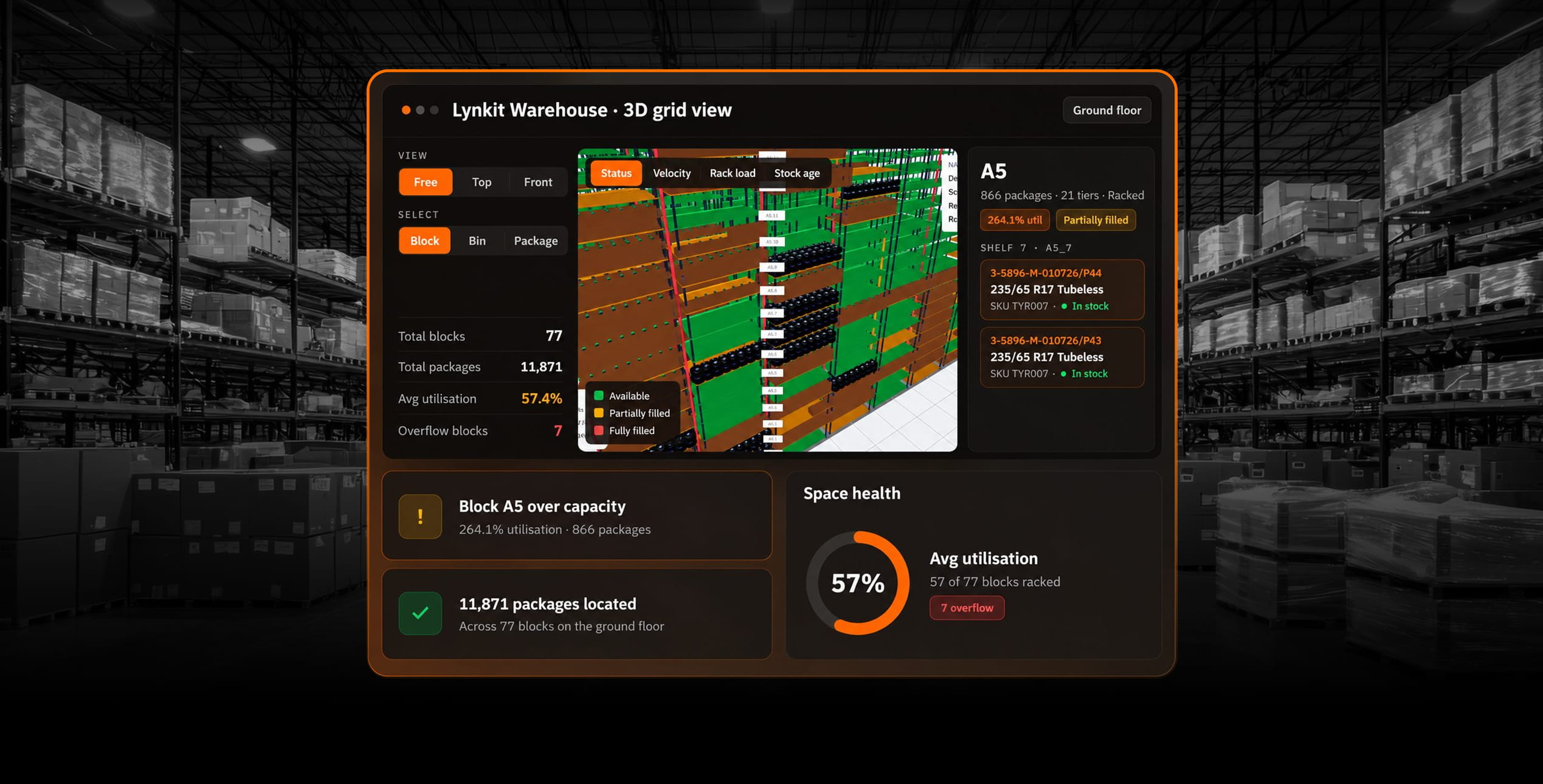
- 3D Grid of your warehouse for layout planning and bottleneck checks
- AI features you can see working on your own data, such as slotting, pick optimisation and alerts
- Integrations with ERP, TMS, e-commerce and accounting tools
- Indian compliance support, including GST invoicing and e-way bills
- Simple screens that floor staff can learn quickly
- Clear pricing and support, including implementation timelines and training
WMS for Shippers: The warehouse is where your promise to customers begins.
A great WMS will give shippers visibility of their inventory and orders, to help streamline dispatch and track deliveries. This provides a single flow of information from your shelf right to the customer's doorstep. Manufacturers can ensure batches and expiry dates are managed appropriately, retailers can fulfill orders efficiently and 3PLs can provide separation between stock and invoicing per client. This will ensure you have the perfect solution for your shipping.
Where does Lynkit's WMS Software fit?
Lynkit is a supply chain automation company based in India that provides businesses across the globe (India, the Gulf, Southeast Asia and South Asia) with a warehouse management system that integrates with their transport management system and Lynktrac, providing GPS tracking and cargo monitoring. The module based application allows businesses to begin with basic warehouse management and expand as needed.
Choosing a Smarter WMS System for Your Warehouse
Warehouses of the future are those which can be trusted to meet expectations. They know exactly where everything is, what needs to happen next and where your shipments are. Start by noting down your main pain points throughout the day. Then pick your top 2-3 vendors. Get them to demonstrate how their software works using your own stock and orders. Then choose which system you’ll be using on the floor. Book a demo with our Lynkit team to see how it will work in your warehouse.
FAQs: AI-Powered WMS in India
What is an AI enabled WMS?
An AI-enabled WMS is warehouse management software that makes suggestions for your warehouse based on your stock, orders and processes. It can give you recommendations on where to store stock, the most efficient picking routes and staffing requirements as well as identify issues.
How is a WMS system different from basic inventory software?
The inventory software program tracks quantities. A WMS machine also directs the work: receiving, put-away, choosing, packing and dispatch, with actual-time region information and guidelines for a way each task needs to happen.
What is the best WMS software in India?
The best WMS will depend on how you want to run your operations. See which option offers the best real time visibility, scanning capabilities, AI capabilities, ERP support, compliance support and service from the vendor. Try 2-3 different options on your own stock and orders.
What is the cost of WMS software in India?
The cost will depend on the vendor you choose, how many users and warehouses there are, what modules you need and whether you have any hardware like scanners. Get a full quote including implementation costs, training, support and add ons so you can compare fairly.
Can a WMS integrate with GPS tracking, smart and digital locks?
Yes. A WMS can integrate with GPS tracking, smart and digital locks meaning you will have data from your warehouse dispatch available on the trip. Alerts will also be triggered when a lock is opened or tampered with.
Is a WMS right for small and medium sized shippers?
Yes. Many are designed to be modular so you can start with some basic functions like inventory, scanning and order fulfillment. Choose a solution that can scale to meet your volumes.