How Dock and Gate Automation Can Reduce Vehicle Turnaround Time at Logistics Hubs and Plants
By Moeen Khan
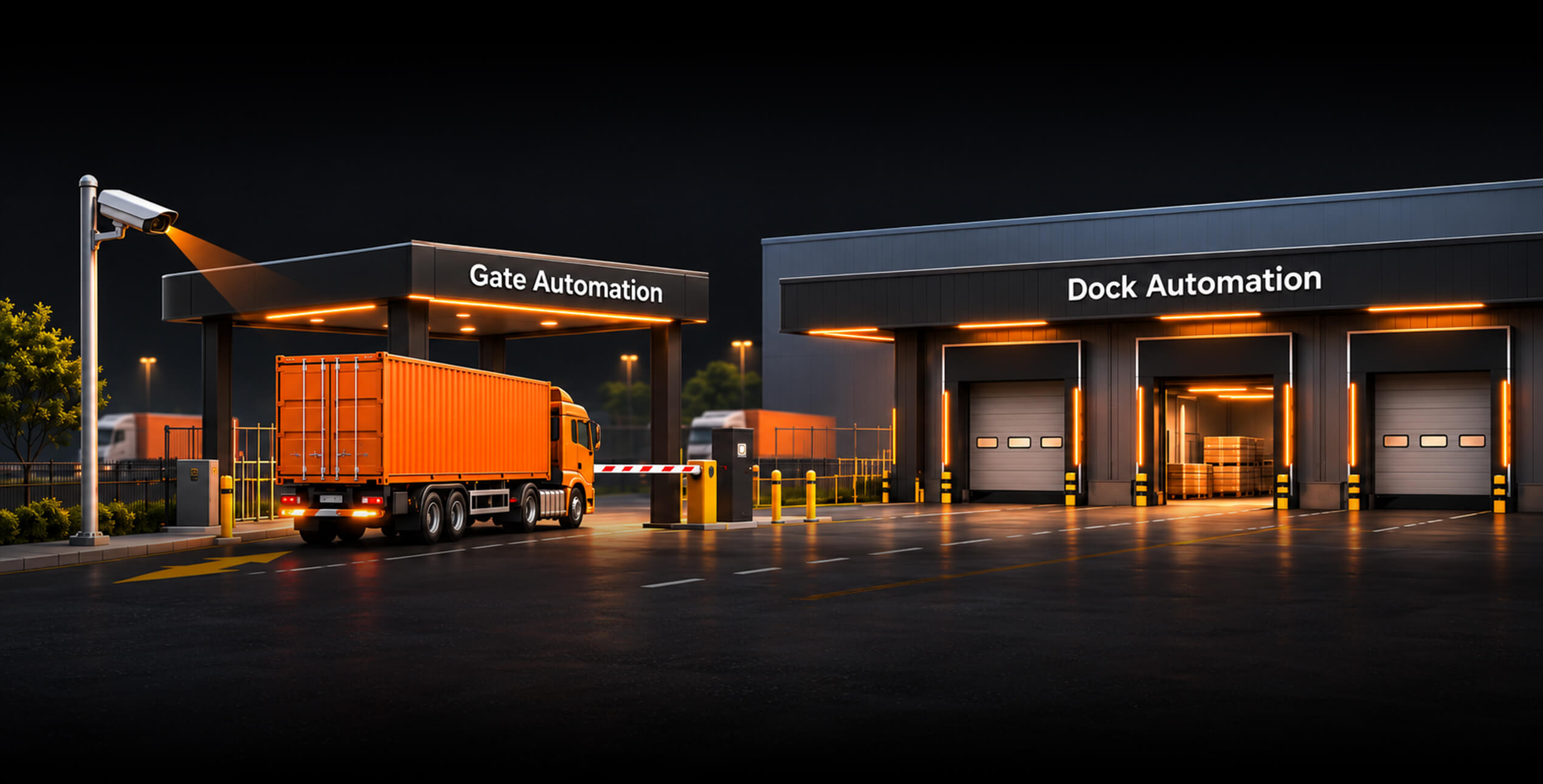
Imagine your truck arrives at the plant gate at 9am. They then have to wait for gate pass, queue for an available dock, complete paperwork and leave in the afternoon. The actual loading process has only taken up a small portion of time. Implementing automation at the dock and gate reduces these waiting times by removing manual processes such as register, phone calls and paper gate passes. Here is how vehicle TAT can be reduced at your logistics hubs and plants, plus what to look out for when choosing a system.
What Is a Vehicle TAT, and Why Does Turnaround Time Matter?
Vehicle TAT is the time taken for a vehicle to enter and leave your premises. It includes the time taken to check in at the gate, get checked through, wait for a dock, load/unload, document and then check out.
Every extra hour incurs a cost. Long turn times incur detention costs, fewer trips, late deliveries and blocked yards meaning drivers are waiting around. Reducing the turn time is one of the fastest ways to improve your costs and service without adding more vehicles.
Where Time Is Lost at Gates and Docks
- Manual Recording of Dock-In and Dock-Out Times - Dock in/out times are manually logged by supervisors. Data can be out of date, rounded or not recorded at all which makes it difficult to determine at which point vehicles are losing time.
- Manual Recording of Loading Start and End Times - The start and finish time of loading/unloading can be manually recorded and therefore is difficult to determine when delays have occurred and how long loading/unloading has actually taken.
- Manual Counting of Pallets and Items - Counting pallets, boxes and individual items manually takes time and increases the risk of miscounts, shortages and disputes after dispatch.
How Dock Automation Reduces Vehicle Turnaround Time
Pre-Arrival Scheduling and Dock Appointments
When transporters book a time slot in advance, hubs can plan dock capacity and spread arrivals through the day, instead of facing a rush at the gate every morning.
Automated Gate-In and Gate-Out
Vehicle details can be identified within seconds by scanning a QR code/RFID Tag/ANPR. This information will be matched to the trip that has been planned. Digital gate passes will be issued and the time of vehicle entry and exit will automatically be captured. Vehicles will then be automatically announced through yard speakers by using text-to-speech. Each dock will have a digital screen that will show what vehicle needs to report to which bay.
Smart Dock Allocation and Live Queue Visibility
The system will assign the most suitable available dock based on the type of cargo, vehicle and priority, allowing everyone to see the queue live. The driver knows exactly where they need to go resulting in continual use of the docks. The vehicles automatically validate and map to the correct dock to ensure they have actually parked in the correct location, and will highlight if they have not. Times are automatically logged at every point of the process (gate in, arrival at dock, start loading, finish loading and leaving) meaning you can measure the turn around times at each step. Pallets and boxes are automatically counted ensuring that the correct amount was loaded/unloaded reducing any shortages and arguments.
Digital Documentation and e-POD
Loading confirmations, invoices, e-way bills and proof of delivery are captured digitally at the dock. Paperwork that used to hold a vehicle back is completed while loading is still in progress.
Dock Dwell Time Analysis and Bottleneck Detection With AI Cameras
AI-enabled cameras automatically record timestamps for all activities taking place at the dock including vehicle arrivals, docking, start and end of loading, start and end of unloading and departure. By analysing how much time vehicles are spending on each activity and identifying idle times when vehicles are waiting to be loaded or unloaded, you can find exactly where you are losing time. Once identified you can see if delays are due to loading/unloading, documentation or resource waiting. This tells you how much time could be saved and allows more effective shift planning for your staff to ensure that you have enough loaders/unloaders available.
Logistics Hub Automation and Plant Automation With GPS Tracking, Smart Locks and Digital Locks
The gate is just a part of the journey but the best logistics hub automation will bring the entire process together:
With GPS tracking, hubs and plants will know when a vehicle is going to arrive. This means that they can prepare their dock and staff to receive it. If Geofencing has been set up, the gate-in process can be automated when the vehicle enters the site. Once loaded, smart locks and digital locks ensure your cargo is locked away securely. All events of opening and closing will be recorded with the time and date. When leaving the site, you can quickly check if the seal is intact. This means your vehicle will leave quicker and you can have peace of mind that your load is safe.
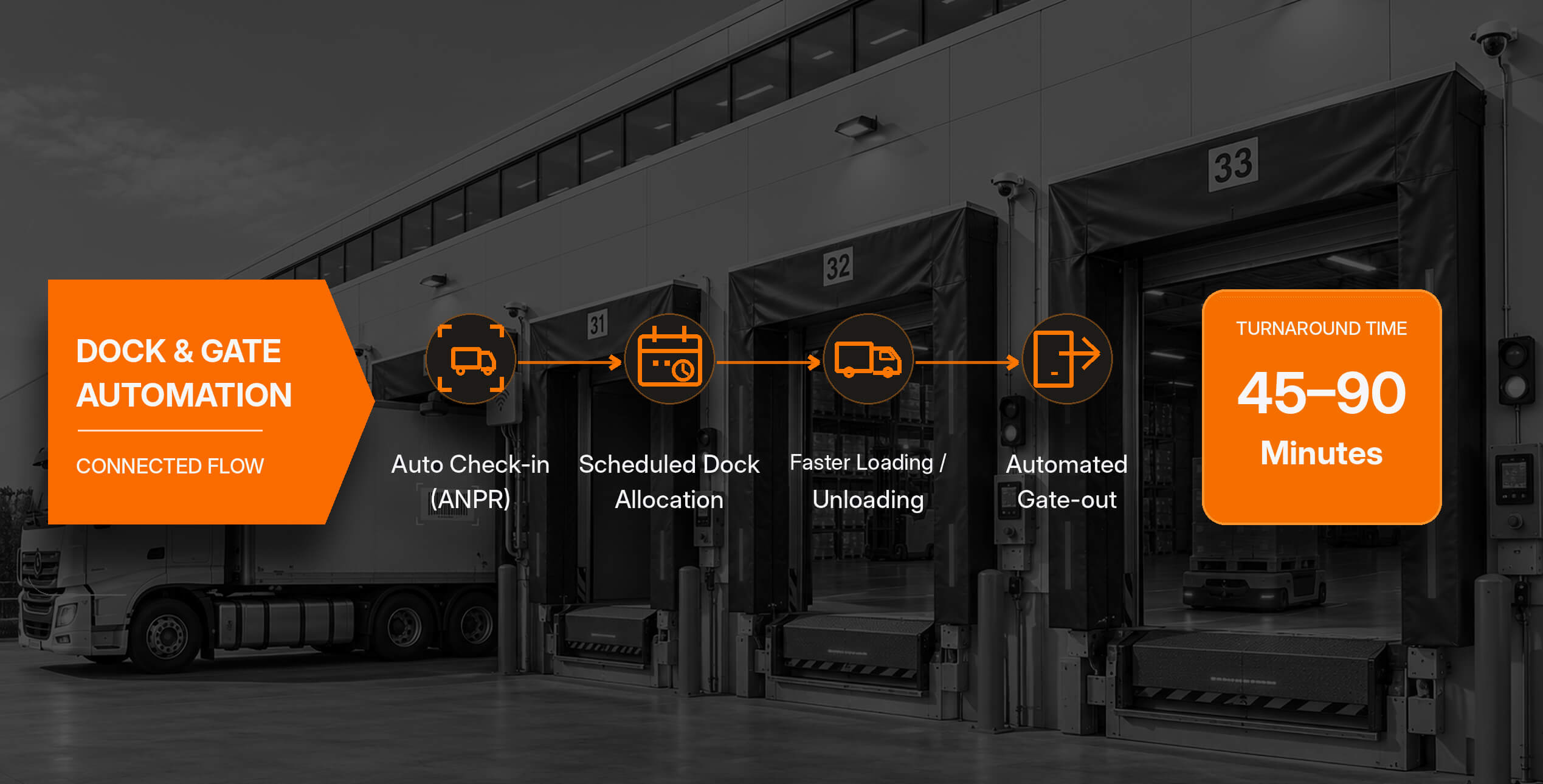
Connecting Transport Management, Fleet Management and Asset Management
Dock automation works best when it is not a standalone tool.
- Transport management: Integration of dock scheduling with aTransport Management System allows planning of vehicles based on actual dock availability. Information on vehicle arrivals will then be fed back into the planning.
- Fleet management: Live vehicle data, driver availability and idle-time reports show which vehicles lose the most time at gates, so you can fix the real bottleneck.
- Asset management: Trailers, containers and returnable assets can be tracked in the yard, which cuts the time spent searching for the right unit.
When these three connect, turnaround time becomes a number you can measure by stage and improve month after month.
What to Look for in Dock Automation Software
Shortlist systems that offer:
- Slot booking and live queue management for transporters and dock teams
- Automated gate-in and gate-out using QR, RFID or number plate recognition
- A TAT dashboard that breaks turnaround time down by stage and by site
- Integration with TMS, WMS and ERP so data is not re-entered
- GPS tracking and geofencing for arrival alerts
- Support for smart locks and digital locks to secure and verify loads
- Mobile access for security staff, dock supervisors and drivers
- Multi-site control if you run several hubs or plants
Where Lynkit Fits In as a Supply Chain Management Company
Lynkit is a supply chain automation company based in India. It provides services to businesses in India, the Gulf, Southeast Asia, and South Asia. The company automates logistics, warehousing, fleet monitoring and asset tracking under one platform, and works with Lynktrac for GPS and cargo tracking. Users can begin with the part of their business that is causing delays and add more modules as they grow.
Cutting Waiting Time, One Gate at a Time
You don’t have to fully automate immediately. Start by identifying how long your vehicles are taking to move between each stage (gate to dock to exit) and identify the areas causing delays. Resolve this bottleneck and trial the solution at one hub/plant. Once you have some data to compare, share this with your teams. By having visibility of where time is lost, you can give it back. If you’d like to see how this can be achieved at your sites, book a demo with our Lynkit team.
FAQs: Dock and Gate Automation for Logistics Hubs and Plants
What is vehicle TAT in logistics?
Vehicle TAT means Turnaround Time, which refers to the total time taken by a vehicle while staying in a facility from entry into the gate to exit after loading/unloading. This includes all times taken for gate checks, waiting period, dock time and processing of documents.
How does dock automation reduce turnaround time?
Automated processes such as booking slots, automatic gate in/out, intelligent dock assignment and digital documentation can help reduce waiting times. This means vehicles will have reduced queueing times and docks will be in use more consistently.
What is gate automation, and how does it work?
Automated systems will identify vehicle and driver using a QR code, RFID or number plate recognition system and will issue a digital gate pass once they have matched against the trip. This system will automatically record the time of entry and exit.
Do smart locks and digital locks help at docks and gates?
Yes. Smart locks and digital locks are used to protect the cargo once loaded and will log every opening/closing with the time and date. This allows for rapid verification of the seals at the point of exit and any tampering will be identified.
Can dock automation integrate with TMS, WMS and fleet management systems?
Yes. Dock automation can integrate with transport management systems, warehouse management systems and fleet management tools to keep your dock schedules, dispatch planning and vehicle information up to date and eliminate manual data entry.
Which businesses benefit most from logistics hub automation?
Manufacturing, distribution, 3PL, cold chain and locations where there is a high volume of vehicles going through the gate/dock area on a daily basis. Small delays add up quickly!